


The Legacy of Bell Auto Parts, George Wight, and Roy Richter
Discover the story of Bell Auto Parts — the pioneering speed shop that helped define American hot rodding, racing safety, and performance innovation.
Origins of Bell Auto Parts: George Wight and the Birth of Speed (1923–1943)
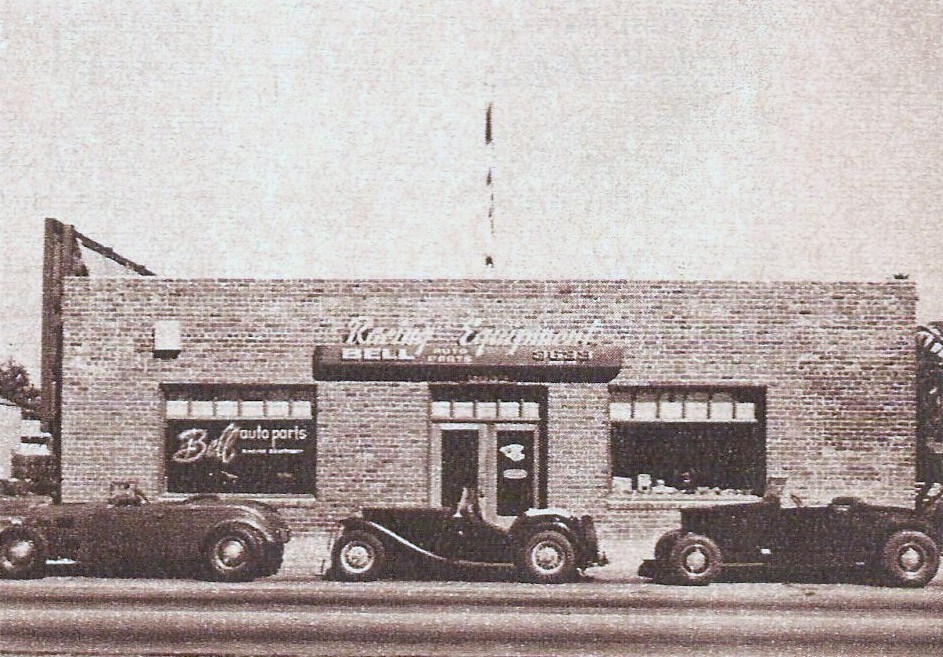
In the early 1920s, Southern California became the epicenter of the American hot rod movement. Among its pioneers was George Wight, who in 1923 opened an auto wrecking yard at 3633 East Gage Avenue in Bell, California, just southeast of Los Angeles. At the time, nearly half the cars on the road were Model T Fords, fueling a booming aftermarket for speed and performance parts.
Wight saw opportunity where others saw scrap. He began salvaging early hot rod parts, refurbishing and reselling them to racers and enthusiasts. The Los Angeles dirt track scene was thriving, with stripped-down Model Ts dominating at legendary venues like Legion Ascot Speedway near Alhambra. This culture of performance and innovation helped shape what would become Bell Auto Parts, one of the most iconic names in American speed equipment history.
The Evolution of OHV Flathead Ford Performance
By 1928, George Wight had constructed a brick building to house his growing business. Bell Auto Parts became a community hub where racers could buy parts, trade advice, or consign race cars. The shop carried top brands of the era, including Miller and Winfield carburetors, and overhead valve conversions by George Riley and Crane Gartz (CRAGAR).
When the Cragar Corporation, Ltd. closed in 1932, Wight purchased its patterns and inventory, preserving a brand that might otherwise have disappeared. True to his inventive nature, he improved on the Cragar head design, introducing a cross-flow configuration that offered superior performance and breathing efficiency.
By the late 1930s, Bell Auto Parts had become one of the most respected speed shops in the United States, serving a community of racers and builders from across the country. Wight passed away in 1943, but his widow kept the shop open through the war years, ensuring the Bell Auto legacy lived on.
Roy Richter and the Golden Age of Bell Auto Parts (1945–1953)
When Roy Richter purchased Bell Auto Parts in 1945, he already had a reputation as a winning driver and a skilled builder of midget, sprint, and championship race cars. His “Richter Streamliner” tether cars had made him a respected name in racing circles and gave him valuable experience in manufacturing and mail-order sales.
After World War II, America’s racing scene exploded. The hot rod parts market was booming, and Richter positioned Bell Auto Parts as the bridge between independent speed part manufacturers and the growing number of racers eager to upgrade their cars. He became a distributor for industry legends like Iskenderian, Edelbrock, and Weiand, helping launch the modern speed equipment industry.
In 1946, Richter published the first Bell Auto Parts catalog, effectively creating “Racing’s General Store.” The catalog connected thousands of local shops and racers across the country, offering access to over 10,000 performance parts. By 1948, Bell Auto Parts had grown into a national catalog powerhouse with thousands of independent dealers.
Among Bell’s innovations were the Bell steering wheel and Dural hand pump, both of which became staples in racing garages everywhere. By the early 1950s, the Cragar name—revived by Richter—appeared on numerous new parts, including transmission adapters. In 1952, Richter expanded into foreign car sales, representing brands like MG, Austin-Healey, and Jaguar.
Expansion and Innovation: Bell Helmets and Cragar Mags (1954–1987)
The mid-1950s marked a turning point for Bell Auto Parts. The speed equipment industry had grown so large that traditional retail models could no longer meet demand. In 1955, Richter incorporated the Cragar Equipment Company, reviving George Wight’s legacy brand under a new vision for the modern racing era.
Two innovations transformed the company’s future: the Bell Auto racing helmet and the Cragar SS wheel. In 1954, Richter began manufacturing helmets under the Bell Helmet brand, after recognizing the need for better driver safety equipment. His helmets quickly gained a reputation for quality and protection, setting the standard for motorsports safety worldwide.
Meanwhile, the Cragar SS wheel became an instant icon in hot rodding. Its innovative design combined strength and style, making it a favorite among racers and enthusiasts. By the 1960s, Bell Helmets had moved to Long Beach and Cragar Industries to South Gate, then Compton, reflecting their rapid growth.
By 1967, to streamline operations, Richter created Roy Richter Enterprises, legally separating the manufacturing divisions from the retail business. Over time, various divisions were sold: Cragar Industries and Bell Helmets went to Wynn Oil Company in 1971, while other assets were acquired by longtime employees in 1978.
Even after these transitions, Bell Auto Parts continued under Chuck Strader in Huntington Beach for another decade, preserving the legacy of the company that helped define American hot rodding. Roy Richter passed away in 1983, leaving behind an enduring legacy of innovation, craftsmanship, and speed.
The Lasting Legacy of Bell Auto Parts
From George Wight’s modest wrecking yard to Roy Richter’s racing empire, Bell Auto Parts represents nearly a century of automotive innovation. The brand’s influence on hot rodding, racing safety, and custom car culture remains unmatched.
Today, the names Bell, Cragar, and Richter are woven into the fabric of automotive history—symbols of ingenuity, craftsmanship, and the relentless American pursuit of speed.






Leave a Reply
Your email is safe with us.